Friday, January 8, 2010

On Reading and Reading Groups
(This is not a blog post)


I've been reading some really great books lately but unfortunately the holidays have quickly given way to fiscal year end and one of the most hellishly busy weeks of my job. Reviews are coming soon for Norwegian Wood, Homer & Langley, and The Cardboard Universe: A Guide to the World of Phoebus K. Dank. I hope to use the weekend to get caught up.

Meanwhile, I am building on my Cannonball Read momentum and seeking out more book reviews, discussions, and book-related blogs in my spare time. It has lead to a lot of introspection as I seek to understand what reading means for me, and what kind of reader I am, and what kind of books I want to read next, and why, and what I hope to get out of them, and how to better appreciate what I read, and understand it, and what to do with the excitable urge to share everything that inspires me with other people who will appreciate it too...

Of course this blog and the Pajiba/ Cannonball Read community are a great outlet for this. I'm really glad I made the commitment to participate even when I feel too overwhelmed to contemplate 40+ more books in the coming 10 months. (Really, the hardest part is maintaining the discipline to finish each book I start and not starting too many different books at a time; two are three at most). And as I try to apply order to my chaotic whims I see some opportunities coming up that I want to build into my Cannonball goals.

First, it sounds like there is going to be a large-ish online reading group tackling Roberto Bolaño's 2666 this year. Originally this was a project announced by the guys who did Infinite Summer last year (a large online reading of Infinite Jest that coordinated in-depth analysis of that complex novel while providing summaries of sections to help guide readers of all different experience levels). Now it looks like some of the centralized organization of that effort is falling through but there is still enough interest that people are going to band together and try to pull this off. The web site with detials is here: 2666 Group Read.

From Wikipedia:
2666 (2004) is the last novel written by Chilean-born novelist Roberto Bolaño. Depicting the unsolved and ongoing serial murders of Ciudad Juárez (Santa Teresa in the novel), the Eastern Front in World War II, and the breakdown of relationships and careers. The apocalyptic 2666 explores 20th century degeneration through a wide array of characters, locations, time periods, and stories within stories.
I'm going to attempt to read this along with the group. If anyone else is interested enough to give it a try I welcome you. The book consists of 5 parts so I will probably post 5 seperate "reviews" as I work through it. They space out the reading pretty well (about 50 pages a week, 15 weeks total) so I will continue to read other novels and review them here.

The other big news is that it looks like there is enough support to get a loose Pajiba/ Cannonball Read reading group organized. I haven't had much of a chance to follow up on it this week due to work obligations but announcements should be comming soon. It won't be a big ordeal since most of the structure- blog networl, Facebook Group, Web Site- alredy exists. It is just an attmept to propose a "book of the month"so that various Pajibans can read the same thing at the same time and maybe have some good discussion and sharing come from it. I think Lolita will be the first book. Any official announcements will come from Pajiba.com.

Tuesday, December 29, 2009

8. The Elegance of the Hedgehog by Muriel Barbery


The Elegance of the Hedgehog is a novel written by French author and philosophy professor Muriel Barbery in 2006 and translated to English in 2008. It was a very successful book in France, spending almost two years on the best sellers list (That's more than Dan Brown does over here) and it has done pretty well for a work of translated fiction in the US enjoying strong sales and mostly positive reviews. It is a novel of ideas with a focus on cultivating an appreciation of the beauty in the world that goes unnoticed by so many.

The story is told by two narrators, both residents of a luxury Paris apartment building. The principle character is Renée, the building's concierge, and her first person narrative sections make up the majority of the story. Renée spends her days tending to the needs of the wealthy families who live at number 7 Rue de Grenelle. She carefully maintains an outward image of a dull, frumpy, stereotypical Parisian concierge and makes every effort to conceal her true nature from those around her- that she is a passionate autodidact who spends her free time engaged with art and philosophy.

The other narrator is an exceptionally bright 12-year-old girl living the the building named Paloma. Her perspective is relayed entirely in the form of entries in her journal. Paloma has decided that growing up means living a life that is tedious and unhappy, and has therefore decided to commit suicide on her 13th birthday. Her journals are used to record observations about the world as she looks for something with meaning; something worth living for. She keeps two journals, one of "Profound Thoughts" to record observations and insights about human nature and a second of "Movements of the World" where she records particularly beautiful or interesting movements or actions, everything from the elegant movements of football players her Dad watches, to the grace and beauty of a falling rose pedal, or the absurd and sublime incident of two mannered women fighting over the last pair of underwear at an Paris boutique (Ricky Fitts would be proud).

These two character begin the story in their own separate worlds, isolated from almost everyone around them and unaware of each other beyond superficial familiarity. As the story progresses a third character is introduced, a retired Japanese businessman named Kakuro Ozu who moves into the building and manages to see through the facades of both characters and engages them, bringing them out of their respective hiding. These matters of plot, however, are mostly a pretext to allow the characters to muse on philosophy, the meaning of life, the beauty of art, and other ideas. The novel is filled with allusions to Tolstoy, Kant, Husserl and Marx as well as 17th century Dutch painters and Japanese arthouse filmmakers and also films like Blade Runner. It is an interesting and thought-provoking mixture.

It was a different perspective for me to read a novel by an older, female, European author. I enjoyed the characters even if they were a bit thin and unrealistic (Paloma was great, but she did have a tendency to sound like a middle-aged philosophy professor at times.) There was a lot of class-consciousness in the story, especially from Renée, the concierge, who really seemed to be going to extraordinary lengths to ensure that none of the wealthy families she worked for caught on to the fact that she was reading Kant and Husserl in her spare time. I can relate to keeping to yourself and not advertising your intellectual tendencies but the need for being so covert and guarded was hard to understand. Would the residents really care, or pay any mind at all if she was found reading a book instead of watching TV? I also had trouble accepting Palomas haste to chose suicide as the only viable option despite being presented to us as a highly intelligent person who must know that she has only experienced a fraction of what life has to offer at age 12. But it is best to accept these elements and give the story a chance. Themes of class struggle and the idea of suicide are important to the novel for the philosophical concepts they represent. If Camus can state that "there is but one truly serious philosophical problem, and that is suicide" in The Myth of Sisyphus I should accept Paloma's inclination as well.

The real point of the novel is in the constant digressions into observations of human nature and reflections on the beauty of art. Barbery is using a novel to explore ideas about how we live and why we live. The novel is about philosophy, literature, music, art, and how they lend meaning to life. Once you have read it through you can flip through it again at random and any given section you re-read will give you something to consider and reflect on. This alone makes it worthwhile, and accounts for much of the popularity and praise the book has received.

Friday, December 18, 2009

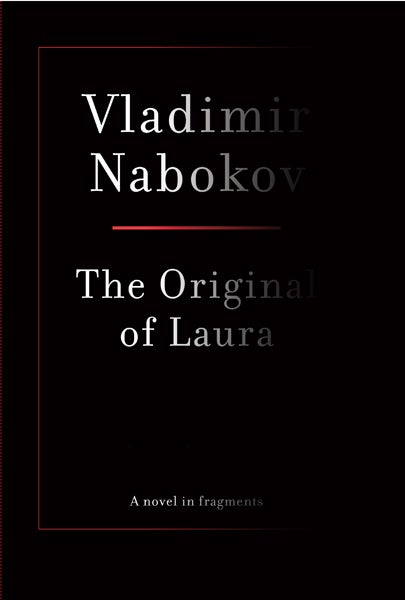
7. The Original of Laura (Dying is Fun) by Vladimir Nabokov


When Vladimir Nabokov died in 1977 at the age of 78 he was working on a novel to be called The Original of Laura. Nabokov is famous as the author of Lolita, Pale Fire, the memoir Speak, Memory and many other novels, essays, and short stories. He left instructions that in the event of his death any unfinished work was to be destroyed. He was known as a perfectionist and has advised that other writers should destroy rough drafts of their work so they won’t be picked over later by scholars (then again, his wife reportedly had to stop him from tossing Lolita into the incinerator at one point, so maybe he isn’t the best arbiter of cultural value).


His wife could not bring herself to destroy this work either and left the manuscript and the responsibility to their son Dmitri when she died. The idea of a latent masterpiece left unfinished and at risk of never being brought to light was the subject of much controversy, speculation and debate in the literary world for thirty years after Nabokov's death. Eventually, Dmitri decided to go against his fathers wishes and have the manuscript published.


To understand this book requires some knowledge of Nabokov's writing process. He has said that he likes to conceive his novels in full before he begins writing. He then writes the novel out on a series of index cards because it gives him the freedom to jump into different sections without being tied to the order of the novel and this also makes it easier to rewrite sections without having to perform major surgery on a typed or hand-written manuscript.


The incomplete manuscript for The Original of Laura consists of Nabokov's own handwriting across 138 index cards. The published book features a reproduction of an index card on each page with a printed version of the text below. It is really more like a roughly sketched out novella. The pages are printed on heavy paper stock and only printed on one side to give the novel more heft and justify the $35 list price. The cards were arranged by Dmitri with a few brief editorial clarifications included where necessary. That, along with Dmitri's introduction, is it.


The story is difficult to piece together. It jumps between short chapters (really just rough drafts of chapters) that tell the story of an overweight academic named Philip Wild who is married to a young, beautiful and promiscuous young woman named Flora. The opening scene describes an affair she has with another man after a party. The story then reaches back to tell stories of her past and her family. At some point a book has been written by one of her former lovers called "My Laura." It is a work of fiction but appears based on an affair the author had with Flora, a fact not lost on friends and acquaintances (one tells her: “And there’s your wonderful death ... You’ll scream with laughter. It’s the craziest death in the world."). Her husband finds it all humiliating, but also regards it as exceptionally well written. He is preoccupied with the idea of his own death and likes spend hours meditating, imagining erasing himself slowly from the toes up and then restoring himself. For about the first half of the novel the narrative holds together and you feel like you are reading a pretty normal, kind of choppy story but after that it begins to fall apart and becomes a series of notes and briefly sketched out scenes. Some cards just feature a quote, definition, or a series of synonyms (the last is: "efface, expunge, erase, delete, rub out, wipe out, obliterate,").


After so much anticipation the response from critics and scholars was one of disappointment. They found fault with the quality of the writing and the incompleteness of the novel, although I think it is unfair to judge this against such expectations. The questions shouldn't be: 'is this as good as other novels?' but rather: 'is this interesting; is it valuable; is it better than nothing?' Because 'nothing' is exactly what we had before, and now we have this glimpse into an idea for a novel from a masterful writer as he neared the end of his life. It's not a candidate for my best of the decade list, but it is a fascinating document. It is an insight into the writing process of a great writer. The incompleteness and obscurity is not intentional, and it is up to the reader to make sense of it without any way of knowing what is right or what was intended.


When I read a book there are usually scenes, moments, and descriptions that really jump out at me as being beautifully written and thought provoking. Usually these scenes occur in the context of a story but here they have to be found lying around on there own amidst the notes. I assure you that there are beautiful ideas and descriptions to be found in this book, but it is hard to really call it a book at all. Imagine a gifted writer leaves his notebook behind at a table in Starbucks and you flipped through it. The Original of Laura was interesting like that.

Monday, December 14, 2009

6. Home Land: A Novel by Sam Lipsyte


Homeland by Sam Lipsyte is one of the funniest books I have read in a while. The novel is written as a series of letters to a high school alumni newsletter from an alum who "didn't pan out." After Lewis “Teabag” Miner somehow winds up on the mailing list for Eastern Valley High's alumni newsletter, Catamount Notes, and suffers through all the updates from all the Catamount doctors, lawyers, bankers, and brokers who are buying houses, having kids and accomplishing all the other milestones of middle class life he decides to write back from the perspective of someone who has gone a different route since graduation.


"We've got a state senator, a government chemist, a gold-glove ballplayer, not to mention, according to the latest issue of Catamount Notes, a major label recording artist in our midst... Is this what Principal Fontana meant by the phrase "well-rounded?"
It's fucking spherical, Catamounts.

Alas, my meager accomplishments appear pale, if not downright pasty, in comparison."


Although the book doesn't aspire to much more than acidic black comedy the writing aims high, giving Lewis an erudite and literary voice which enhances the comedy when juxtaposed with such bleak and disturbing material. The style is similar to that found in McSweeny's where mannered, literary prose is applied tongue-in-cheek to banal subject matter for humorous effect, only here the subject matter is much darker and the satire much more biting.


Each chapter is presented as a letter to the editor of Catamount Notes but the narrative isn't really constrained by this gimmick. Once the story gets going plot events and dialogue are presented just like in any other story. At first the updates are just stream of consciousness rants cataloging the various indignities of Lewis's daily life and everything that is wrong with it. There are many anecdotes from the high school days that inform on the current state of his character, from the lusting over the jazz dance squad that inspired his fetish for knit leggings, to the locker room bullying incident that resulted in his unfortunate nickname and various sordid details of the more successful classmates' past that undermine the careful images they try to present in the Notes. Characters from the past keep popping up in Lewis's daily life as well, including the former principal (now fallen far from grace), and wouldn't you know there is a reunion coming up.


See, here's the problem with these book reviews, especially when it's a good book: I'll spend an hour or more trying to compose a decent introduction to the story (without giving to much away) and try to find new and varied ways of heaping praise on the writer, and I'll search for the perfect lines to include as a quote and I'll struggle for the right conclusion that will leave you curious to read the book for yourself... and all I really want to do is put the book in your hands and let you read it- just the first few pages- and from that you will know everything you need to know much better than I can explain it.


So fuck it, here's 1,000 words from the first few pages of Homeland by Sam Lipsyte. It will be the highlight of your day. I didn't write it, I just found it for you (but I should be getting a commission because if my humble readership doesn't flock to Amazon- or at least their local library- after reading this, I'll be amazed).


Excerpt


It's confession time, Catamounts.

It's time you knew the cold soft facts of me. Ever since Principal Fontana found me and commenced to bless my mail slot, monthly, with the Eastern Valley High School Alumni Newsletter, I've been meaning to write my update. Sad to say, vanity slowed my hand. Let a fever for the truth speed it now. Let me stand on the rooftop of my reckoning and shout naught but the indisputable: I did not pan out.

We've got Catamount doctors, after all, Catamount lawyers, brokers, bankers well versed in the Eastern Valley purr. (Okay, maybe it was never quite a purr. Maybe more a surly mewl. But answer me this: Why did we fail so miserably to name this noise with which we spurred out sporting types to conquest? Moreover, why was the mascot of Eastern Valley an animal that prefers elevation? A catamount is a mountain cat, Catamounts!) We've got a state senator, a government chemist, a gold-glove ballplayer, not to mention, according to the latest issue of Catamount Notes, a major label recording artist in our midst.

Yes, fellow alums, we're boasting bright lights aplenty these days, serious comers, future leaders in their fields. Hell, we've even got a fellow who double-majored in philosophy and aquatic life management in college and still found time for a national squash title. Think about it, Catamounts. We didn't have squash at Eastern Valley. We didn't have tennis, either, unless you count that trick with the steel hairbrush and the catgut racquet whereby the butt skin of the weak was flayed. Point being, this boy, Will Paulsen (may he rest in peace), left our New Jersey burg without the faintest notion of squash, yet mastered it enough to beat the pants off every prep school Biff in the land, and still carry a four point zero in the question of Why does the Universe Exist Underwater?

Is this what Principal Fontana meant by the phrase "well-rounded?"

It's fucking spherical, Catamounts.

Alas, my meager accomplishments appear pale, if not downright pasty, in comparison. I shudder at the notion of Doctor Stacy Ryson and State Senator Glen Menninger remarking this update at some fund-raising soiree—oh, the snickers, the chortles, the wine-flushed glances, and later, perhaps, the puppyish sucking of body parts at a nearby motor lodge. Shudder, in fact, is not quite the word for the feeling. Feeling is not quite the word for the feeling. How's bathing at knifepoint in the phlegm of the dead? Is that a feeling?

...

Here's the latest by me, Valley Kitties: I rent some rooms in a house near the depot. I rarely leave them, too. When you work at home, fellow alums, discipline is the supreme virtue. Suicidal self-loathing lurks behind every coffee break. Activities must be expertly scheduled, from shopping to showers to panic attacks. Meanwhile I must make time to pine for Gwendolyn, decamped three years this June, the month we were to wed. So much for scheduling. Valley Cats who maintained vague contact with me in the midnineties may recall Gwendolyn, that doe-eyed, elklike beauty I met at an aphorism slam in Toronto. What you may not realize is how much I truly loved her, if that's the word for wanting so much to bury your head and weep upon the coppery tufts of a woman's sex while reciting "An Irish Airman Foresees His Death," you can hardly sit on the sofa with her.

Gwendolyn's gone now. The sofa's still here. It's deep and velveteen, a goodly nook for napping, or reading in magazines about Gwendolyn and Lenny, her movie star brother, love, and unacknowledged legislator of her life. They take lazy walks along the shoreline, buy antique paper lanterns for their patio. I don't begrudge them their bliss, if it's bliss. Bliss has my blessing. A patio, though, let a quake crack it open. Let the black earth eat them.

Gwendolyn always said I expected too much from the world.

"You wake up every morning like you should get a parade."

I told her I deserved one with the dreams I endure, the kind that find me sobbing myself awake, groping for last night's roach, or else standing at the fridge until dawn sucking on a frozen bagel. I mean dreams where tremendous dragons rear their spiny heads, sink tall teeth in my neck, muss my hair, sign my report card, call me "Darling," "Shmoo-shmoo." Survive that, you should absolutely get a parade, a lavish procession, a town car motorcade through the Canyon of Heroes with our very own Catamount legend Mikey Saladin, who, if you've been following his career, has really blossomed into a fiercesome example of the hulking contemporary shortstop. (Sorry you had to sit out the World Series, Mikey! Good luck in arbitration!)

But I digress from our topic: discipline. You see, good graduates of Eastern Valley, I'm my own boss. I'm also my own sex slave. I'll squander the hours I should be working trolling the Internet for pictures of women whose leg warmers have been spattered with semen. You could call this my kink, Catamounts, and there are more specimens floating about in the ether than you may care to imagine, though not nearly enough for me. Lately I've stumbled across the same photos again and again. I'm beginning to know names, or else bestow them: Jasmine, Loretta, Brie. I'm sure those names will sound familiar to most of you, and as for Jasmine, Loretta, and Brie themselves, immortal lovelies of the Jazz Dancing Club, what can I say but, "Sorry, ladies." I've been beating off to you for half my lifetime, why should I stop now?

But fret not your frittered looks, ex-Eason Valley girls, your time-slung slack and crinkle. When I exercise my right to self-love I run a sort of projected aging program in my mind, picture you vixens in your necessary twilight, your bodies dinged up by babies, gravity, regret. I figure it's only fair. I'm no young buck myself, though, of course, just turn to my "Intimate Portraits" page in the yearbook and you'll see that I was never anything approaching bucklike. Not unless there's such a thing in nature as a buck turtle.

—From the book Home Land by Sam Lipsyte; Copyright (c) 2005.

Tuesday, December 8, 2009

5. Good Omens by Terry Pratchet and Neil Gaiman


Good Omens is a collaboration between fantasy writers Neil Gaiman and Terry Pratchet. It's a comedy about the end of the world where anthropomorphic demons, angels, and horsemen of the apocalypse, along with witches, witch-finders, and satanic nuns prepare for the coming of the Anti-Christ and Armageddon. (The catch being that everyone on Earth rather likes it there and doesn't want things to end in a cataclysmic battle-to-end-all-battles and so steps are taken, intentionally and unintentionally, to subvert the master plan and save the world.) If you've seen recent theologically-based comedy adventure stories like Dogma or Little Nicky you know some of what to expect from the characters in Good Omens. The angels are wry and cynical, the demons are sympathetic and likeable, the leadership of both heaven and hell is questionably overzealous and humanity is stuck in the middle, a healthy balance between the two extremes.

As I am writing this I can actually feel the pull towards writing a negative and critical review. I didn't think it was a terrible book. I kind of liked it and I can see why other people would, too. I really like Gaiman (well, I really liked the Sandman comics, I never got into his novels). Maybe this just isn't my style. Comic-fantasy stuff like Douglas Adams has never really clicked with me despite the frequent recommendations from friends. Or maybe it is because I started reading Homeland by Sam Lipsyte while I was still trying to finish Good Omens. I frequently have two books going at once but usually one is a more serious literary novel and the other is a more lighthearted popular work. In this case I had two contemporary humor novels going at the same time and Lipsyte was a much better read. Then again, maybe it's because this is the kind of book I would have abandoned halfway through but now, because of Cannonball read, I feel compelled to finish everything I start so I can keep up my stats.

I know a lot of people who pride themselves on never giving up on a book or always finishing what they start. Personally, I don't get it. This is actually something I do a lot, I jump into a novel for 100 pages or so to get a feel for the writing and the story, then lose interest and jump to something else. I figure I can't possibly read everything I want to in one lifetime so I might as well hook up with Rushdi, Borges, or Garcia-Marquez for a couple days to at least get a feel for them. I promise I'll call, but who knows? Besides, I take enjoyment in the little things when I read, the descriptions and ideas that can be communicated in a page or two. The bite-size morsels that sometimes make you have to lower the book for a minute and think , or jump up and pace around the room. I can usually find enough of those in the first half of the book while momentum is high and the pages are turning easy. Yes, there is something to be said for sticking with a book for the duration and letting character and narrative arcs, themes, and plots run their course- I'm not advocating skipping the back 60% of novels- it's just that, given that you can only read so much in a life time, well, it's better to have read and abandoned than never to have read at all.

But I didn't abandon Good Omens, I stuck it out to the end. At times it dragged for me. Maybe this was a result of the collaborative writing experiment by Pratchet and Gaiman. The story was full of clever bits and indulgent digressions as Gaiman and Pratchet tried to out-cute each other in the writing process. It jumped around constantly to new characters and situations but seemed to lack any discipline or cohesion in the storytelling (I realize everything fits together in the end and therefore everything is included for a reason, but it still seems like sloppy storytelling with an emphasis on incidental character descriptions and asides instead of telling a tight, well-paced and compelling story.) The tone of the writing which was amusing at first really started to wear on me by the end and it felt like things were taking forever to come to a conclusion which I found somewhat unsatisfying. If it sounds like something that appeals to you it probably will. As for me, I won't be concerning myself with Discworld or American Gods anytime soon, but I am interested to read The Graveyard book and Gaiman's recent capstone to the Batman series "Whatever Happened to the Caped Crusader?"

Wednesday, November 25, 2009

4. Juliet, Naked by Nick Hornby


Nick Hornby will be forever defined by High Fidelity. He is known for his ability to write about the modern t-shirt-and-jeans-guy who is obsessive about music and pop culture and generally clueless about relationships and being a serious grown up. In addition to fiction he has written non-fiction collections about books, music, and sports that let you know he most likely is one of those guys himself and speaks from authority.

Juliet, Naked takes a look at characters that embody many of the classic Hornby characteristics but are starting to get a bit older and starting to question the amount of time they have devoted to things that don't really seem to matter in the big picture. While that struggle and growth theme pops up in all his novels, here it seems a bit more melancholy. The novel has a kind of bittersweet tone as characters look for hope and deal with regret. Do you mourn the time you lost and the mistakes you made? Is it too late to change? And if not, how do you find the strength to make that change if your whole life has been defined by doing things that are safe, comfortable and non-challenging?

That last paragraph is going to make this book sound more depressing than it is. There is actually a lot of humor as you would expect from Hornby. This book is filled with careful observations in which we recognize a lot of our own qualities in the characters, like when a particularly moving piece of art coincides with a major life event or decision and takes on a heightened significance. And I was especially self-aware as I read the early sections where characters carefully composed reviews to post on an internet message board and then anxiously awaited the reactions and agonized over them (being that that is essentially what I was doing at the time with these reviews). I also recognize the constant self-doubt that the characters experiences when trying to get a grip on their feelings and communicate them to other people, trying to anticipate reactions and playing out whole conversations mentally before deciding how to act. Hornby is able to incorporate these embarrassingly familiar qualities into his characters and makes them simple and funny at the same time.

Still, I doubt a famous writer is going to find me by way of Pajiba and open up a dialogue in which we share intimate details of our lives within days of knowing each other- the plot of this books requires a healthy suspension of disbelief. Things also tended to work out a little too perfectly sometimes. I hate it when characters in a romantic comedy meet cute while currently in relationships with other people and then get conveniently dumped or cheated on right away so that they can continue to pursue the new relationship and still be a sympathetic character in our eyes. Events seemed to occur just when they needed to for a larger point to be made and it can be disruptive as a reader if you are constantly taking your eyes off the page in order to roll them. But I tried not to be too distracted by my nagging inner skeptic because this was, after all, just a novel, and once I started getting into the story I really couldn't wait to see where it was going next. I got swept away, and even when I thought I knew where it was going there were enough twists and turns that I was sufficiently engaged to the end.

This was a good book. Light and entertaining, but also provides a lot to think about afterward.

Monday, November 23, 2009

3. The Fermata by Nicholson Baker


Have you ever daydreamed that you could pause time and wander around fully conscious and aware while everything and everyone around you was frozen still (like Zack Morris in Saved by the Bell)? What if someone were were opposed to unduly profiting from this gift and had no ambition to exploit it for personal gain but felt there was no harm in using it to freeze time and undress random women on the street and masturbate? Can you imagine this crude adolescent fantasy as the subject of a serious novel?

I have been meaning to read Nicholson Baker for a while now. I'll let Wikipedia provide a brief introduction of his writing style:
"[Baker] often focuses on minute inspection of his characters' and narrators' stream of consciousness, and has written about such provocative topics as voyeurism and planned assassination. His fiction generally de-emphasizes narrative in favor of careful description and characterization. Baker's enthusiasts appreciate his ability to candidly explore the human psyche, while critics have charged that his subject matter is trivial."
Wikipedia does not mean this lightly. His first novel, The Mezzanine, "presents the thoughts and memories of a young office worker as he ascends an escalator to the mezzanine of the office building where he is employed." That's it: simply a stream of ideas, memories, and impressions triggered by a ride up the escalator in 144 pages. His second novel, Room Temperature, is a similar series of random thoughts and observations as a man feeds his infant daughter a bottle one morning (despite the lack of action I assure you the writing can still be interesting). Another novel, Vox, consists entirely of an erotically charged phone conversation between a man and a woman on a phone sex chat line.

Well, based on the sheer audacity of it's premise I decided to start with The Fermata. It is written in the first person as an autobiography by a narrator with the ability to stop time at will. The whole world around him freezes but he can move around and interact with the frozen people (who are completely unaware anything that happened when time resumes provided he puts everything back the way it was). As I mentioned above he does not chose to rob banks, cheat at cards, or try to become a superhero. Instead, his primary use of the ability is to undress random women he encounters for his own personal sexual gratification. He almost never seeks any interaction with them in the real world, content to limit himself to brief sexual experiences while time is stopped. He goes out of his way to explain that he has no intention of hurting anyone, that he loves and admires each woman he does this to (of course he rationalizes that they wouldn't mind being undressed by him since it doesn't harm them in any way, and he is appalled by the idea of rape but justifies his groping and voyeurism as harmless). If nothing else this is a very interesting character to get to know.

The book acknowledges some of the practical implications of this gift, too. He continues to age normally while time is stopped, so if he stays "in the fold" for a few hours he will have a sensation similar to 'jet lag' when he emerges with his body feeling like it is four hours later than it actually is. (Baker doesn't extrapolate the premise as far out as David Foster Wallace does in Brief Interviews with hideous Men: if time stops locally, it must stop for the whole planet, and then also for the whole solar system, and what of the infinite universe?) But the logic of how and why it works and the implications it has on time and space aren't really the point here.

At times this is a fascinating novel. Baker's powers of observation are impressive and some of the insights and descriptions make for very compelling reading. It is also very provocative and sexually explicit. In addition to the primary subject matter being a man who undresses and admires nude women we are also treated to several detailed sexual fantasies and, since he occasionally writes pornography and leaves it for a stranger to find, we get a few chapters of his pornographic stories as well.

I don't read a lot of erotica but I don't think I have ever been more aware of and disrupted by the language used in such scenes (and that's especially an issue with this book where 'those scenes' make up 80% of the novel) The adjectives weren't so bad, it was the nouns that were the problem. I suppose all authors who write about sex have to struggle with it. Some words are too clinical, others too crude, and everyone has their own personal list of words that hey just hate to encounter. It's like a minefield for writers- use the wrong words and you can spoil the scene for your readers. The narrator of this novel is particularly bad at it and frequently makes things even worse by employing hokey euphemisms for body parts, which was especially jarring.

I'm not sure that this wasn't in some ways intentional since the entire story is being told in the voice of a character who is a bit awkward and and a bit weird to begin with. It's entirely possible that Baker is not intending to be titillating and is using the cringeworthy descriptions to disrupt the eroticism and make a larger point about the main character. Or maybe I'm just being too generous, but I'm willing to read another Baker novel to find out. Sometimes his ideas sound like they come from the imagination of a 15-year-old kid (what if the whole story had no plot and was just an elevator ride? What if you could pause time and look at naked chicks) but that's not all he has going on. Except for some of the longwinded fantasy scenes the novel was very interesting. It's a novel of ideas and careful insights about the way we live and the little details of life the frequently get ignored or overlooked. It was funny, thought provoking, shocking, and I think it's impressive that a book like this exists at all.